Inside Labels and Seams
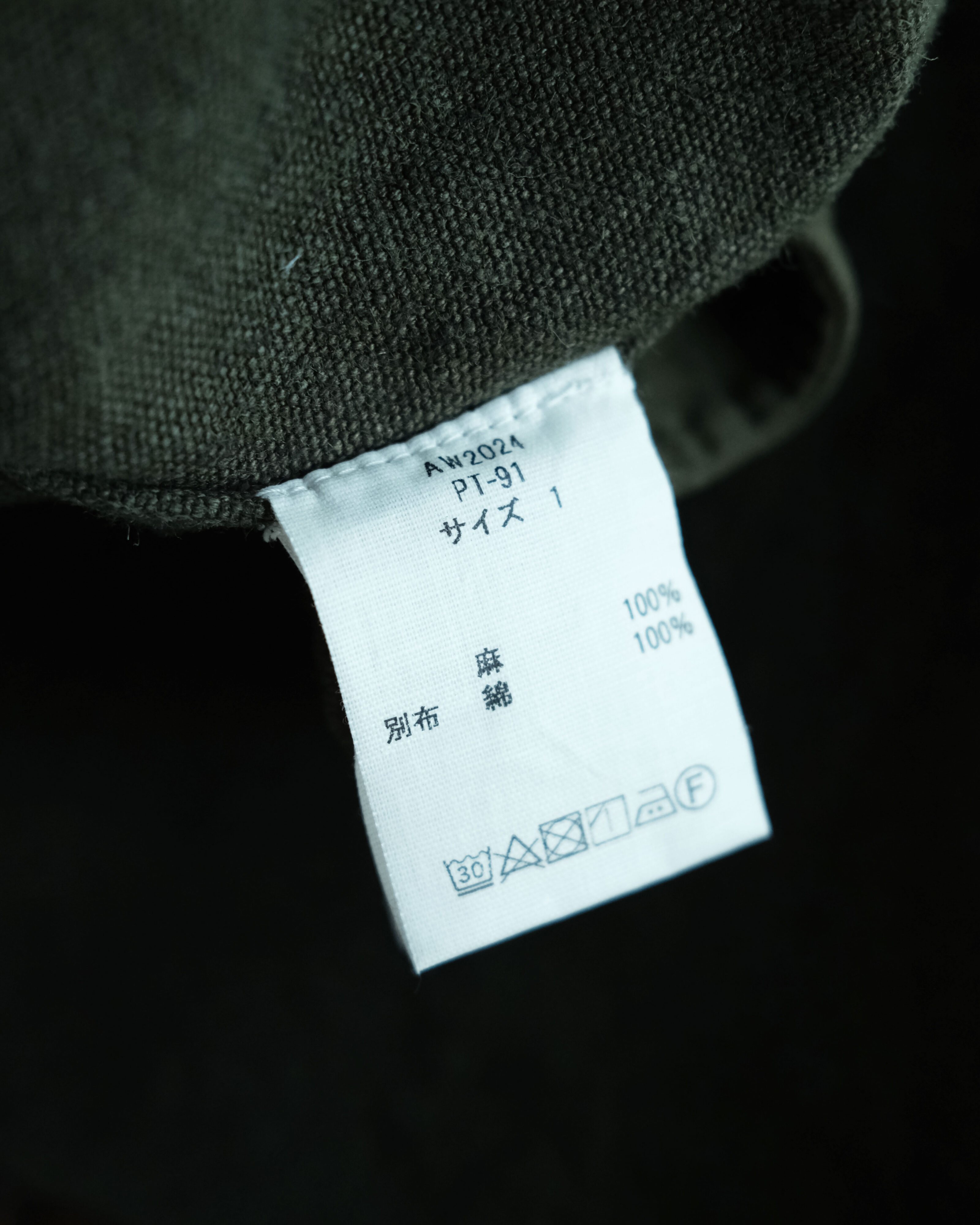
Even when wearing a garment with a pleasant texture, you may have experienced discomfort from a tag sewn nearby rubbing against your skin. Care labels are often made from synthetic fibers, but MITTAN uses cotton labels to avoid irritation. Likewise, the woven “MITTAN” brand label—commonly made of polyester—is produced at a partner mill in Fukui Prefecture using cotton warp yarns woven together with silk.
Using cotton sewing thread also allows both the thread and the fabric to take dye in a similar way, blending well with the natural materials MITTAN uses and resulting in a cohesive finish. However, cotton thread is more delicate and difficult to handle than synthetic alternatives, so each garment is sewn carefully by skilled craftspeople who work exclusively with our partner factories. Their expertise plays a crucial role in maintaining product quality. At the MITTAN atelier, we also conduct ongoing repair-frequency surveys and strength tests to ensure durability.
However, for materials that are less likely to be re-dyed—such as wool or other animal fibers—and for certain stitches or button attachments, MITTAN uses core-spun yarn*1, in which a nylon or polyester core is wrapped in cotton. Using thicker cotton thread to increase strength can lead to shrinkage during garment washing or dyeing. Balancing these challenges with the expression sought in each garment led us to adopt core-spun yarn, which offers the feel of cotton, dyes together with the fabric, and provides the strength of synthetic fibers while allowing the use of finer thread. Additionally, 100% organic cotton sewing thread is limited in color and thickness, so only certain items can be sewn entirely with it. Materials requiring high strength, such as leather, use 100% polyester thread.
By choosing natural materials wherever possible—not only for the fabric but also for tags, woven labels, and sewing thread—we aim to achieve garments with a more comfortable feel. Reducing the use of synthetic fibers also helps limit the generation of microplastics*2, contributing to a lower environmental impact.
- A composite yarn that combines the strength of synthetic fibers with the texture, touch, and moisture-absorbing properties of cotton.
- Plastic particles measuring 5 mm or smaller. Once released into the natural environment, they may enter marine life, drinking water, and the atmosphere, where their potential harmful effects on humans and other organisms have been noted.